wax training.Ear Wax Removal Training Book a Course
WHAT YOU'LL LEARN

Safe, structured, professional training.

The course is structured around safe practice, patient assessment, infection control, clinical decision-making and the practical skills needed to carry out ear wax removal responsibly. Built to the standard your insurer expects.

Treatment methods

All three removal methods, hands on, and how to choose between them.

We teach microsuction, warm water irrigation and manual removal with instruments. No single method suits every ear. What matters is a careful assessment first, then choosing the method that fits the patient in front of you, and knowing when not to treat at all.
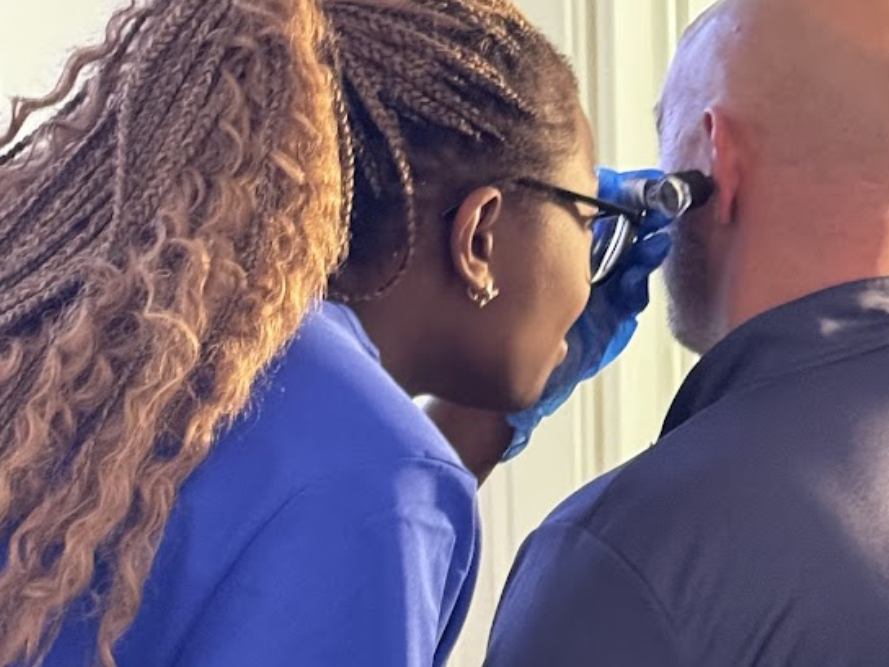
Trainee examining an ear canal with an otoscope during a practical training day
00Before any procedure

Otoscopy and assessment first

Every appointment starts with a look in the ear, not with a machine. Using a head loupe and otoscope you examine the ear canal and, where it can be seen, the eardrum, so you know exactly what you are dealing with before anything goes into the ear.

✓Take a history: previous ear surgery, perforation, grommets, recent infection, pain, discharge, dizziness and which ear hears better
✓Confirm that wax is present and is likely to explain the symptoms
✓Recognise red flags that need referral rather than treatment, such as sudden hearing loss, pain, discharge, bleeding or anything that looks abnormal
✓Choose a method, gain valid consent, record your findings and check the ear again afterwards
Trainee practising microsuction on a training head, with the suction machine beside her
01Method 1 · No water

Microsuction

A fine suction probe connected to a suction machine lifts wax out of the canal while you watch through a head loupe, which gives you magnification and light. You work under direct vision throughout, removing the wax in small pieces and pausing whenever you need to.

When it's the right choice

Suits most types of wax, from soft to firmer plugs. Because no water goes into the ear, it is often the method considered when irrigation is not suitable, subject to your assessment, training and local protocol.

What the patient feels

A loud whooshing or hissing sound close to the ear, and sometimes a cool or tickling sensation. It should not be painful. A few people feel briefly dizzy, so you pause and let it settle.

Kit used

Professional suction machine, Zoellner suction probes, head loupe and otoscope, disposable ear specula (4mm and 5mm).

When not to use it, or refer
Patient cannot keep their head still The noise is distressing, for example with some tinnitus or sound sensitivity Dizziness that does not settle: stop and reassess Very hard wax: soften with drops and rebook rather than force it Perforation, grommets, mastoid cavity or recent ear surgery: only within your training and scope, otherwise refer Anything abnormal on assessment: refer
02Method 2 · Warm water

Warm water irrigation

An electronic irrigator sends a controlled stream of warm water, at around body temperature, along the wall of the ear canal. The water flows behind the wax and washes it out into a receiver held under the ear. The machine sets and limits the pressure, which is why NICE guidance (NG98) recommends electronic irrigation rather than the old manual syringes.

When it's the right choice

Softened wax in a healthy ear with an intact eardrum and no relevant history. Softening drops, such as olive oil, used for a few days beforehand usually make irrigation more effective and more comfortable.

What the patient feels

A warm, gentle flow of water and a sloshing sound. It should not hurt. Water that is too cool or too warm can make some people dizzy, which is why you check the temperature before you start.

Kit used

An electronic irrigator, which is an optional add-on and not part of the standard kit. You also use the head loupe, otoscope and disposable specula from the kit to assess the ear and check it afterwards.

When not to use it, or refer
Perforated eardrum, or any history of perforation Grommets Recent ear surgery Active infection, including otitis externa Only hearing ear Mastoid cavity Cleft palate, repaired or not Problems after previous irrigation Foreign body in the ear
Electronic irrigator

Warm water at around body temperature, machine-controlled pressure, directed along the canal wall. Only for an ear you have assessed as suitable.

Optional add-on, not in the standard kit
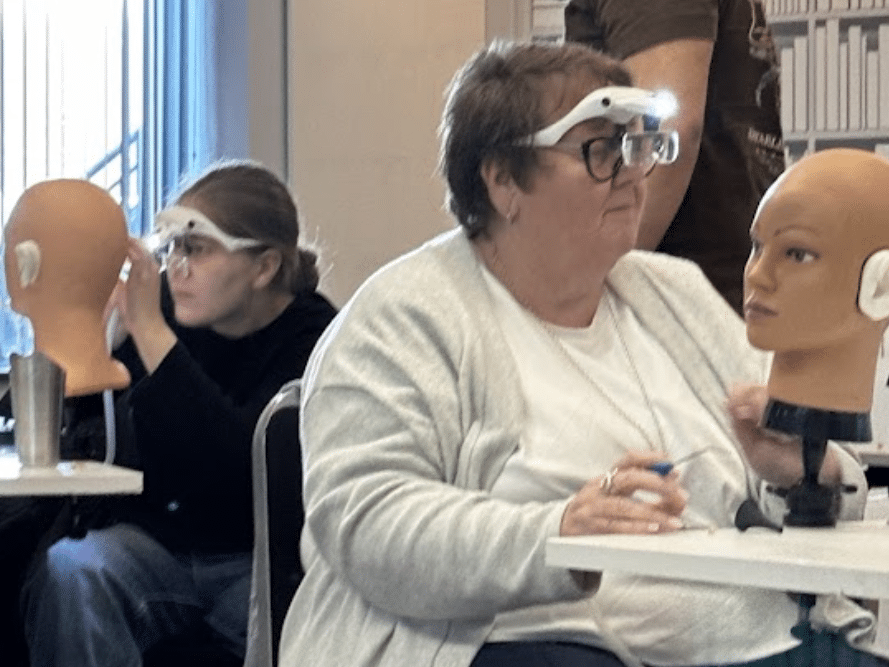
Trainee wearing a head loupe and holding a hand instrument while practising on a training head
03Method 3 · Hand instruments

Manual removal with instruments

Small hand instruments remove wax under direct vision, with the head loupe giving you magnification and light. A Jobson Horne probe has a small ring at one end to ease wax out, crocodile forceps grip loose pieces, and a wax hook can lift firmer fragments. It is quiet and uses no water.

When it's the right choice

Wax near the entrance of the canal, loose flakes, or finishing off after suction or irrigation. It is often used alongside the other two methods rather than on its own.

What the patient feels

Usually very little: some light pressure or a scratching sensation near the entrance of the ear, with no machine noise. Sudden movement can cause discomfort or a small graze, so positioning matters.

Kit used

Jobson Horne probes, crocodile forceps, head loupe and otoscope, disposable ear specula (4mm and 5mm). Wax hooks are also covered during training.

When not to use it, or refer
You cannot see the wax and canal clearly Patient cannot keep their head still or is not cooperative Wax deep in the canal or against the eardrum Narrow, inflamed or very sensitive canal Extra care if the patient takes blood thinners Bleeding, pain or anything abnormal: stop and refer
+
Methods are often combined

You might use suction to clear most of the wax and an instrument to finish, or advise softening drops and a return visit when wax is too hard to remove comfortably. If you cannot remove the wax safely, you stop, advise the patient and refer. That judgement is a core part of what we teach.

The three methods side by side

A quick reference. The right method always depends on your assessment of the individual patient.

Compare
01 Microsuction
02 Irrigation
03 Manual removal
How it works
Suction probe and machine, under magnification and light
Warm water from an electronic irrigator washes the wax out
Hand instruments under direct vision
Typical use
Most wax types; often considered where irrigation is not suitable
Softened wax in a healthy ear with an intact eardrum
Wax near the entrance, loose flakes, finishing off
Noise
Loud whooshing close to the ear
Gentle water sound
Quiet
Water involved
No
Yes, at around body temperature
No
Key exclusions
Patient unable to keep still; caution with very hard wax, dizziness and noise sensitivity
Perforation or history of one, grommets, recent ear surgery, mastoid cavity, cleft palate, active infection, only hearing ear
Poor view of the canal, patient unable to keep still, wax deep in the canal
Kit
Suction machine, Zoellner probes, head loupe, specula
Electronic irrigator (optional add-on, not in the standard kit), otoscope, specula
Jobson Horne probes, crocodile forceps, head loupe, specula

This section describes what the course covers. It is general information, not advice about any individual patient. Our teaching is aligned with NICE guideline NG98 and common UK primary care practice, and you always work within your own training, insurance cover and local protocols.
Day 1 · online, at your own pace

Online Theory Day

About 7 hours of short videos, written lessons and quizzes across 17 modules, built by our clinical team. You must pass it before your practical day, and our clinical team reviews and signs off your results.

✓Ear anatomy and how wax actually forms
✓Common conditions, red flags and when to refer
✓Infection control and gaining valid consent
✓The theory behind all three removal methods
✓A full reference library you keep for life
Day 2 · hands-on

Practical training day

Because the theory is done beforehand, the day is given over to supervised practical work in a group of no more than 6. You don't leave until you've performed all three methods competently.

✓Supervised hands-on practice in all three methods
✓One-to-one feedback from NHS-trained clinicians
✓Competency assessment and same-day sign-off
✓Free repeat session if we cannot sign you off
✓Your CPD-accredited certificate in your hand
One focused day · 9:30am to 6pm

How the day runs.

Before
Online Theory Day

Complete and pass your Online Theory Day at your own pace (about 7 hours). Our clinical team reviews and signs off your results before you arrive.

9:30am
Welcome + recap

A quick recap of your Online Theory Day so everyone starts the practical on the same footing.

Late morning
Clinical foundations in practice

Examining ears, spotting red flags and contraindications, and gaining valid consent, applied hands-on.

Afternoon
Hands-on practice

Supervised microsuction, irrigation and manual instrumentation with one-to-one feedback.

Late afternoon
Competency sign-off

We assess you on the day. If we cannot sign you off, your repeat session is free.

6:00pm
Certificate

Finish with your CPD-accredited Certificate of Completion and a plan to start practising.

Built to the standard your insurer expects.

The full curriculum follows the regulatory and clinical guidance that governs ear care in the UK. You leave able to assess, treat and document safely, and to recognise exactly when a presentation falls outside your scope and needs onward referral.

BSA NICE NHS HCPC
Sample wax. CPD-accredited Certificate of Completion
Issued on the day
Your CPD-accredited Certificate of Completion

Your certificate is issued on the practical day, as soon as your trainer has assessed you and signed off your competency. If we cannot sign you off on the day, your repeat session is free.

Ready to learn all three methods?

See pricing & dates

A CPD-accredited provider, aligned with BSA, NICE and HCPC standards. Every course is taught by NHS-trained ear care clinicians and certified for professional development.

CPD approved providerBritish Society of Audiology alignedCMAPSAccreditation