Elaine, 44 - Aberdeen
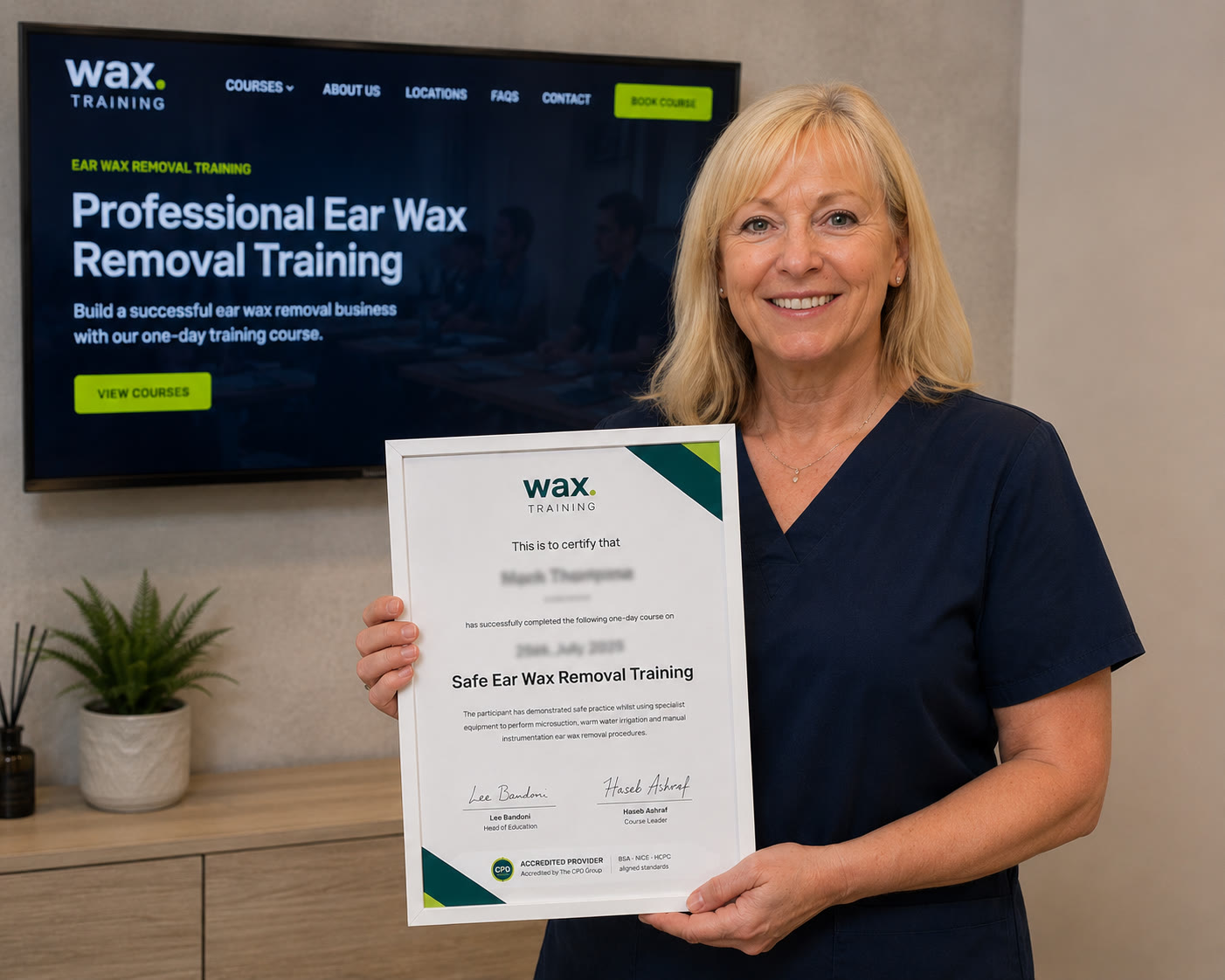
Elaine is a registered nurse with around 18 years in the NHS, mainly in outpatient and community roles. She trained with wax. to run evening and Saturday ear-care clinics in Aberdeen alongside her four-day NHS week. This is her story, in her own words.
“I left the course not only understanding how to perform the procedures, but also feeling that starting a small ear-care business was actually realistic.”
Tell us a little about yourself and your current experience.
I'm a registered nurse and I've worked in the NHS for around 18 years, mainly in outpatient and community-based roles.
I currently work four days a week in Aberdeen and still really enjoy the clinical side of nursing, but I'd been looking for a way to create some additional income without simply taking on more shifts or overtime.
Why did you choose the ear wax removal industry?
I wanted something that was still healthcare based and where my existing experience would be useful.
Ear wax removal interested me because it's a service that people genuinely need and it can often make a noticeable difference very quickly.
I also liked the fact that I could start small. I didn't need to leave nursing or immediately commit to running a full-time clinic.
Why did you choose wax. for your training?
I researched quite a few courses before booking.
wax. stood out because the training looked very hands-on and the course wasn't just focused on learning how to operate a microsuction machine.
I wanted to understand the whole process - examining the ear, recognising problems, knowing when treatment is appropriate and being able to use different removal techniques.
The fact that wax. also talks about actually setting up and running the service made it feel much more complete.
How did you find the course?
I really enjoyed it.
The day was relaxed, but at the same time there was a lot packed into it.
I particularly enjoyed the practical sessions because that's when everything started to come together. The trainers were always there if you were unsure about something, but you were also encouraged to think about what you were seeing and make clinical decisions yourself.
What did you learn?
We covered otoscopy, ear anatomy, different presentations of wax, contraindications, infection control and recognising conditions that require referral.
The practical training included microsuction, warm-water irrigation and manual instrumentation.
Something I found particularly useful was learning that you don't automatically choose the same removal technique for every patient. You have to assess the ear first and then decide what is safest and most appropriate.
Would you recommend wax. training?
Yes, absolutely.
I'd recommend it to nurses who want to develop an independent clinical service but perhaps don't know what their first step should be.
I left the course not only understanding how to perform the procedures, but also feeling that starting a small ear-care business was actually realistic.
What are your plans for the future?
I'm going to start by renting a treatment room inside an established health clinic in Aberdeen.
Initially I'll run two evening clinics each month and one Saturday clinic, while continuing with my NHS role.
Once I start getting repeat patients and recommendations, I'd like to increase that to one regular clinic day every week.
Long term, I'd love to reduce my employed nursing hours and have ear care become a significant part of my working week.
Start your own story
One day of CPD-accredited training with NHS-trained clinicians - all three removal methods, live patients, and the business setup to earn with it.
A CPD-accredited provider, aligned with BSA, NICE and HCPC standards. Every course is taught by NHS-trained ear care clinicians and certified for professional development.